

Modification and Application of Pulse Soot Blower for 260 t/h Circulating Fluidized Bed Boiler
For coal-fired boilers, the tail heating area ash is inevitable. When the ash is serious, the heat transfer efficiency of the tail heating surface will be reduced, the boiler exhaust temperature will increase, and the boiler efficiency will be reduced; the ash of the heating area will also cause the heating surface to overtemperature and aggravate the corrosion of the heating surface, shorten the life span; when it is serious, it will affect the safe and economic operation of the boiler. The company's 2 × 50MW unit, with DG260-9.81/540-1 type
For the high-temperature and high-pressure circulating fluidized bed boiler, the high-temperature superheater with double winding serpentine tube bundles, the low-temperature superheater with double winding in series countercurrent arrangement, the economizer with three tubes arranged in series with double winding, and the horizontal in-line three-return tube air preheater are arranged in the tail flue gas channel in turn, and the flue gas temperature at the outlet of the preheater is designed to be 147 ℃.
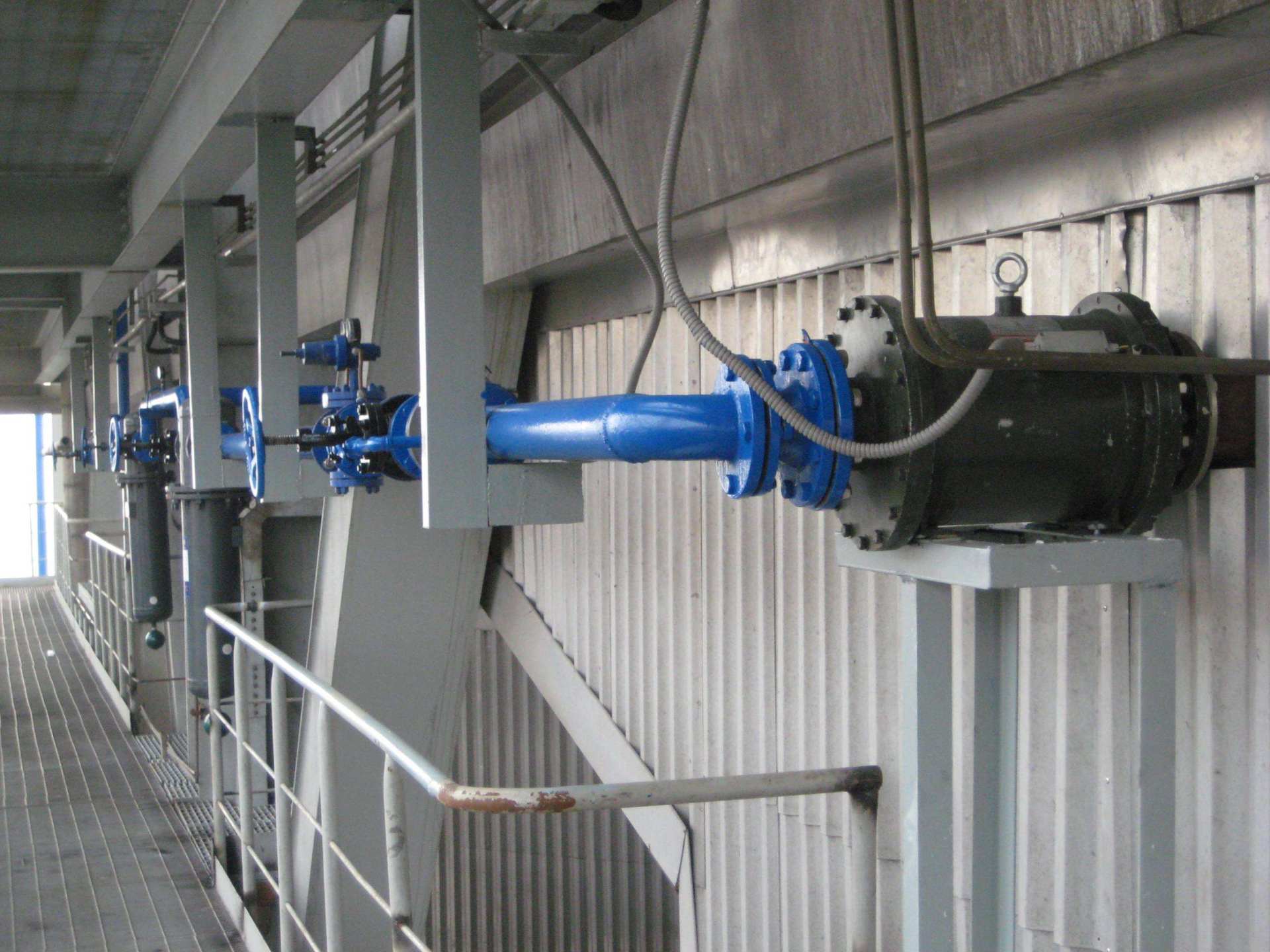
1. Operation of boiler sonic soot blower
When put into production, the tail flue is equipped with 18 SCK-18A small sonic soot blowers of Company A. After debugging and running for a period of time, it was found that the soot blowing effect was very poor, and the boiler had the problem of high exhaust gas temperature. When the boiler was running at full load with high ambient temperature in summer, the highest exhaust gas temperature record exceeded 230 ℃, which seriously affected the overall efficiency of the boiler.
From 2007 to 2008, the boiler soot blowing system was technically modified. After each boiler was equipped with 6 high-power BS-201 rotary flute acoustic soot blowers, the trend of high smoke temperature rise was alleviated, but the boiler exhaust gas temperature was still high, reaching 174 ℃, which could still exceed the design standard by about 27 ℃. From the flue gas temperature distribution, the flue gas temperature at the outlet of the cyclone separator is close to or slightly higher than the design value, while the flue gas temperature at the outlet of the tail flue superheater, economizer and air preheater is significantly higher than the design value. Comprehensive various factors, it can be preliminarily concluded that the serious ash of the heated area is the main reason for the high temperature of the exhaust gas.
2. Principle and measures of ash generation in heated area of boiler tail
The amount of fly ash in circulating fluidized bed boiler is large. If the traditional steam soot blower is used, it will increase the humidity of the flue gas, cause ash accumulation and harden, and aggravate the low temperature corrosion of the low temperature heating surface such as the air preheater. Judging from the condition of the heating surface at the tail of the boiler, all the heating surfaces at the tail have different degrees of ash accumulation, especially in the economizer and air preheater, which is almost full of ash accumulation between the upper and lower tube rows. Obviously, the original sonic soot blower did not play its due role.
Through repeated observation, it is found that there is a large amount of ash accumulation on the leeward side of the economizer and the air preconditioner pipe row, and even the parts close to the sootblower also have different degrees of ash accumulation. As shown in fig. 1, the surface of the top 2~3 rows of pipes is relatively clean, while the lower rows of pipes have a large amount of dust accumulation between the upper and lower pipes, and most of the gaps between the upper and lower pipe rows are full of dust accumulation.
Since most of the heating surfaces of this type of boiler adopt the tube rows in sequence, and the transverse spacing of the tube rows is larger than the longitudinal spacing, there is a smooth air flow channel between the two longitudinal tube rows. This design can effectively reduce the flow resistance of flue gas and reduce the energy consumption of the unit. But such a structure is not conducive to sonic soot blowing. Because the high-speed flowing flue gas will form a reflux zone between the upper and lower pipes, attracting fly ash to accumulate here, and the energy acting on the surface of the pipe row is very limited due to the low energy and the flow direction of the flue gas. Although it can inhibit the accumulation of fly ash, it cannot be completely prevented. The dust accumulation on the windward and leeward sides of the lower pipe row cannot be removed in time, resulting in the dust accumulation between pipes as shown in the figure. This kind of ash buried nearly 1/3 of the surface of the tube row, and block the horizontal flow of flue gas, the tube row into a longitudinal flue gas corridor, due to the increase of thermal resistance, heat exchange efficiency is greatly reduced. This is the main problem of boiler exhaust gas temperature is high.
3. Adopt new energy-saving and high-efficiency pulse device and installation and use
Through investigation, the use of JD intelligent unit pulse soot blower can effectively reduce the exhaust gas temperature of circulating fluidized bed boiler. In November 2011, the factory implemented the transformation of JD intelligent unit pulse soot blower in combination with Class A overhaul of #1 boiler. See Table 1 for the model of rotary flute acoustic wave soot blower and the technical specifications of JD intelligent unit pulse soot blower equipment.
Related News
Contact Us
Telephone:86-27-81887676
E-mail :sanyu9@163.com
Address:NO.7 Happiness Industrial Park,Economic &Technological DevelopmentZone(Hannan),Wuhan, PRC

Mobile Access
Copyright©2024 Wuhan Sanyu Machinery Co., Ltd. This website supports IPV6 access
SAF Coolest v1.3.1.2 设置面板 MSISD-ZFXZ-WDXZE-ZQX
图片ALT信息: WUHAN SANYU MACHINERY CO., LTD
违禁词: First, most, leading, unique, king, dragon head, leader, extreme,
无数据提示
Sorry, the current column is being updated, please look forward to it!
You can view other columns or returnHome Page